Car Battery Replacement: What You Need to Know
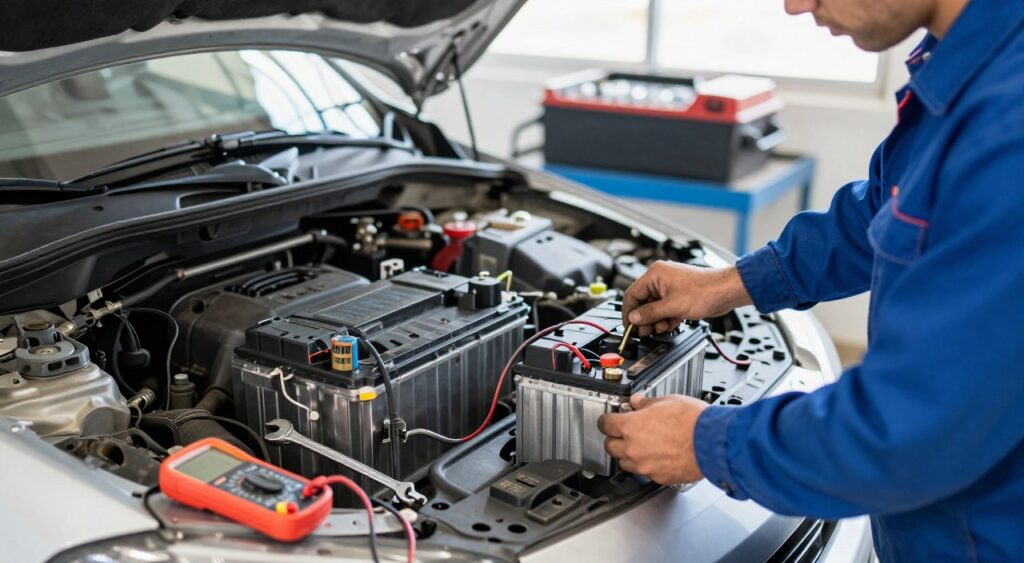
A car battery is key for your vehicle. It powers the engine start and supports electrical systems. Over time, it loses power, making replacement necessary.
Knowing when to replace your car battery can prevent breakdowns and save money. A dead battery can leave you stranded. But, knowing how to replace it can get you moving again fast.
Key Takeaways
- Recognizing the signs that indicate your car battery needs replacement.
- Understanding the importance of maintaining your car’s battery.
- Learning about the process of replacing a car battery.
- Knowing the factors to consider when selecting a new battery.
- Tips for extending the life of your car’s new battery.
Understanding Your Car Battery
Your car’s battery is a key part that gives power to your vehicle. It’s important to know how it works to keep your car running well.
What Is a Car Battery?
A car battery is a special battery that can be charged again. It’s usually made of lead-acid and is vital for starting and running your car. It powers the starter motor, ignition, and other car parts.
How Does a Car Battery Work?
A car battery turns chemical energy into electricity. It has positive and negative parts that work together. The alternator charges it when the engine is on, so it’s always ready to start the car again.
Common Battery Types
There are many types of car batteries out there. Here are a few:
- Maintenance-free batteries
- Low-maintenance batteries
- Deep cycle batteries
- Absorbent Glass Mat (AGM) batteries
| Battery Type | Characteristics | Applications |
|---|---|---|
| Lead-Acid | Affordable, reliable, and recyclable | Most passenger vehicles |
| AGM | High-performance, vibration-resistant, and maintenance-free | High-end vehicles, luxury cars |
| Deep Cycle | Designed for deep discharge and recharge cycles | Electric vehicles, renewable energy systems |
Signs Your Car Battery Needs Replacement
Knowing when your car battery is failing can prevent unexpected breakdowns. Your car’s battery is key, and knowing its condition is vital for your vehicle’s health.
Warning Lights on the Dashboard
Warning lights on your dashboard are a first sign of battery trouble. Modern cars have systems that watch the battery and warn you of problems. If the battery light comes on, it means your battery might be losing charge or there’s a charging system issue.
Slow Engine Crank
A slow engine crank is another sign your battery is failing. When you turn the key, the engine should start quickly and smoothly. If it starts slowly, it might mean your battery is weak or old.
Other Warning Signs
There are more signs your car battery needs a replacement. These include:
- Dim or flickering headlights
- Swollen or bloated battery case
- Corrosion on the battery terminals
- Older age (most batteries last between 3 to 5 years)
Knowing these signs helps you spot when your battery is failing. Regular checks on the battery’s age and condition can also prevent sudden failures.
| Signs | Description |
|---|---|
| Warning Lights | Illumination of battery warning lights on the dashboard |
| Slow Engine Crank | Engine cranks slowly or laboriously when starting |
| Dim Headlights | Headlights dim or flicker, specially when idling or starting the engine |
Choosing the Right Battery for Your Vehicle
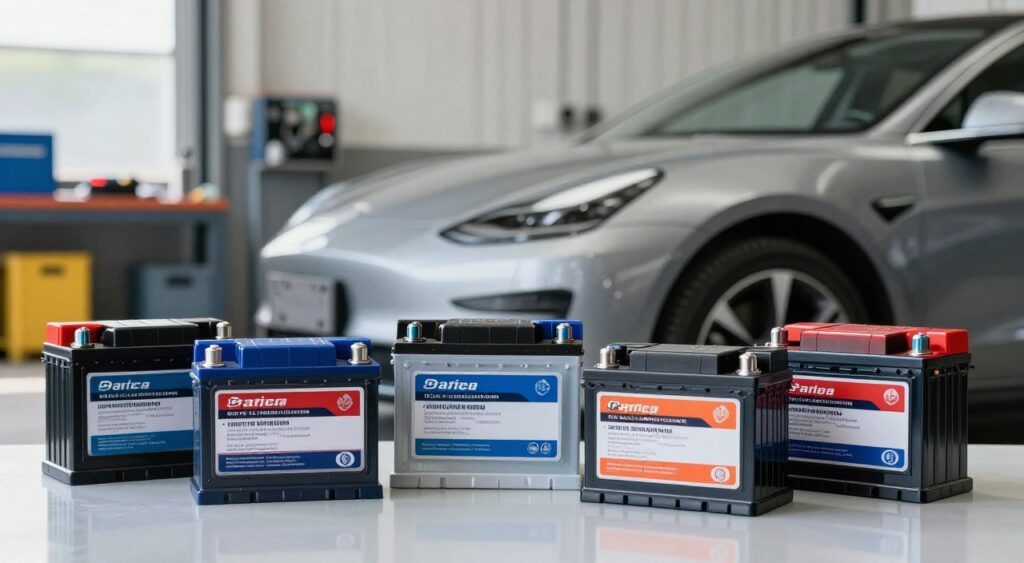
There are many car batteries to choose from. It’s important to pick the right one for your car. You need to know what your car needs, the right battery type, and a good brand.
Factors to Consider
When picking a car battery, think about a few things. These include:
- Vehicle Type: Cars need different batteries. For example, fancy cars might need batteries that start better in cold.
- Battery Technology: New battery tech makes them better and last longer. You can choose between AGM and EFB batteries.
- Climate: Where you live affects your battery. In cold places, you need a battery that can start well in cold.
Top Car Battery Brands
There are many car battery brands out there. Each has its own good points. Some top brands are:
- Optima: They make high-performance batteries that last a long time.
- DieHard: They offer durable and reliable batteries for many cars.
- ACDelco: They make high-quality batteries for different car types.
Battery Size and Specifications
It’s key to get a battery that fits your car and meets its needs. Look in your car’s manual for the right size and specs like CCA and RC.
In short, picking the right car battery means thinking about your car, the weather, and the tech. By focusing on these and choosing a trusted brand, your car will run smoothly and reliably.
How to Replace Your Car Battery
Replacing your car battery is easy if you know what to do. It’s important to understand the process and take safety precautions. This way, you can avoid any risks.
Tools You’ll Need
To replace your car battery, you’ll need a few tools. These include:
- A wrench or socket to loosen the battery terminals
- Gloves and safety glasses for protection
- A new battery that matches your vehicle’s specifications
Always refer to your vehicle’s manual to confirm the correct battery type and size for your car.
Step-by-Step Battery Replacement Guide
Follow these steps carefully to replace your car battery:
- Turn off the engine and all electrical accessories. Make sure your car is in park (if it’s an automatic) or in gear (if it’s a manual), and apply the parking brake.
- Find your car’s battery and identify the negative (-) and positive (+) terminals.
- Disconnect the negative terminal first, using a wrench to loosen the nut on the cable clamp. Remove the clamp from the terminal.
- Disconnect the positive terminal in the same manner.
- Remove any brackets or clamps holding the battery in place.
- Carefully lift the battery out of the compartment.
- Place the new battery in the compartment, ensuring it’s securely seated.
- Reattach any brackets or clamps.
- Reconnect the positive terminal first, followed by the negative terminal. Make sure the clamps are securely tightened.
- Check that all connections are secure and start your car.
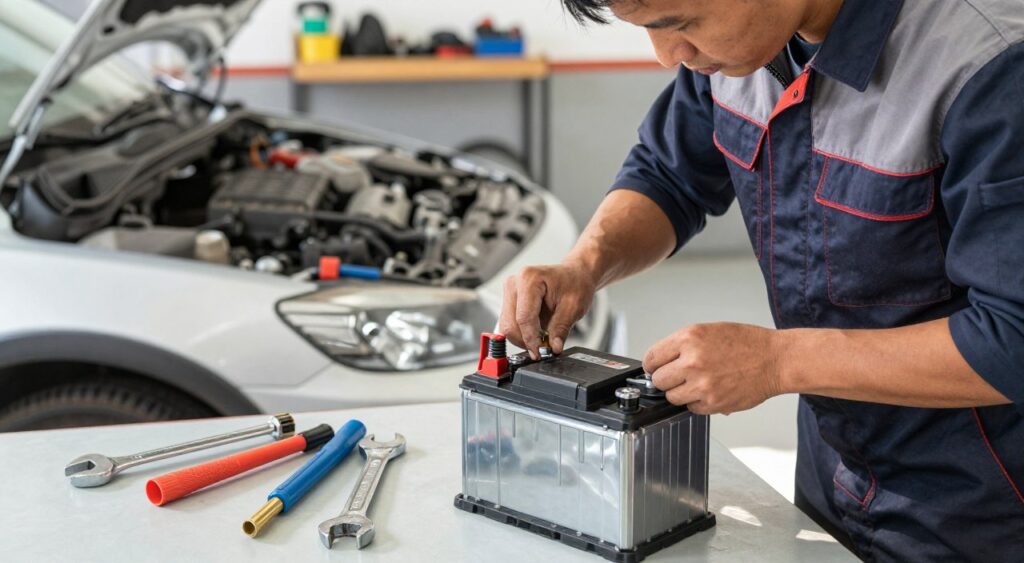
By following these steps, you can safely replace your car battery. Remember to dispose of your old battery properly. Take it to a recycling center or an auto parts store that accepts old batteries.
Maintenance Tips for Your Car Battery
Keeping your car battery in good shape is key to a long life and smooth driving. A well-cared-for battery boosts your car’s performance.
Regular Inspection
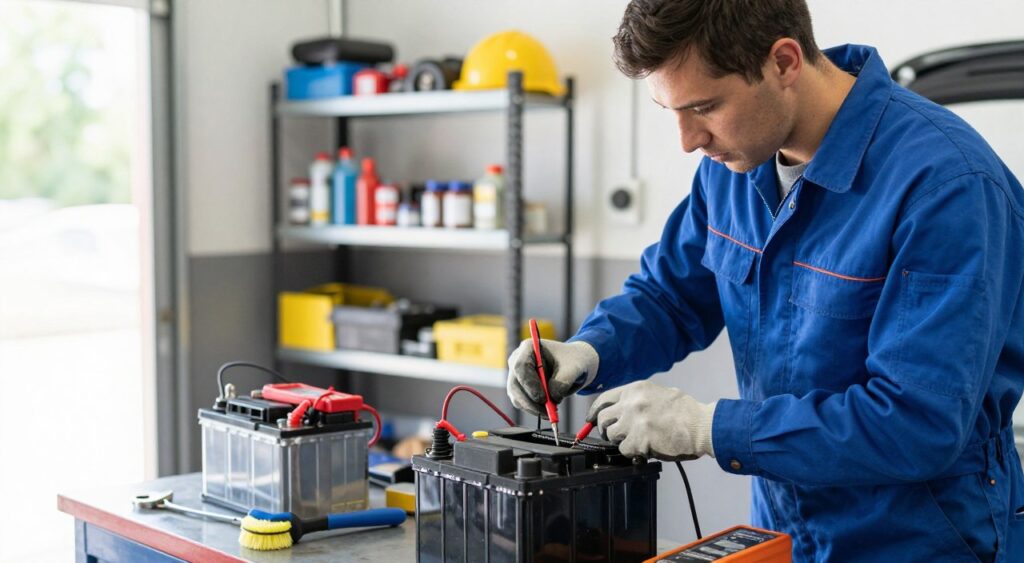
Start by regularly checking your car battery. Look for signs of wear, like corrosion on the terminals. Make sure it’s securely attached.
Key inspection points include:
- Checking the battery’s age
- Inspecting for corrosion
- Ensuring the battery is properly secured
Cleaning Battery Terminals
Corrosion on the battery terminals can hurt your car’s performance. Clean them with a mix of baking soda and water to remove corrosion.
Keeping Your Battery Charged
It’s important to keep your car battery charged. Avoid short trips that don’t let the battery fully charge. Use a battery maintainer if your car sits for long periods.
| Maintenance Task | Frequency | Benefit |
|---|---|---|
| Inspect Battery | Every 3 months | Early detection of issues |
| Clean Terminals | Every 6 months | Boosts battery performance |
| Check Charge Level | Monthly | Prevents deep discharge |
By following these tips, you can make your car battery last longer. This keeps your vehicle running smoothly and reliably.
The Importance of Battery Recycling
Car battery recycling is key to saving natural resources and cutting down on landfill waste. With cars being a big part of our lives, getting rid of old batteries is a big environmental issue.

Why Recycle Your Car Battery?
Recycling your car battery is important for many reasons. First, batteries have harmful stuff like lead and acid. If not thrown away right, they can pollute soil and water.
Second, recycling gets valuable materials back. Lead, for example, can be used again in making new batteries. This saves energy and is better for the planet.
Key Benefits of Car Battery Recycling:
- It keeps the environment clean by getting rid of harmful stuff safely
- It saves natural resources by getting materials like lead back
- It cuts down on waste and the harm of making new batteries
How to Recycle Your Old Battery
Recycling your old car battery is easy. Here’s how to do it:
- Look for local auto parts stores or service centers with recycling programs.
- Many places have special spots for dropping off hazardous waste, like car batteries.
- Some stores will recycle your old battery for free if you buy a new one.
By recycling, you help the planet and follow local rules on throwing away hazardous waste.
Recycling your car battery is a simple way to help the environment. It supports green living and lessens the impact of car care on our planet.
Common Myths About Car Batteries
Car batteries are often misunderstood. Many think they last forever or can be fixed with a jump-start. But the truth is more complex. Knowing the facts helps you care for your battery better.
Myths vs. Facts
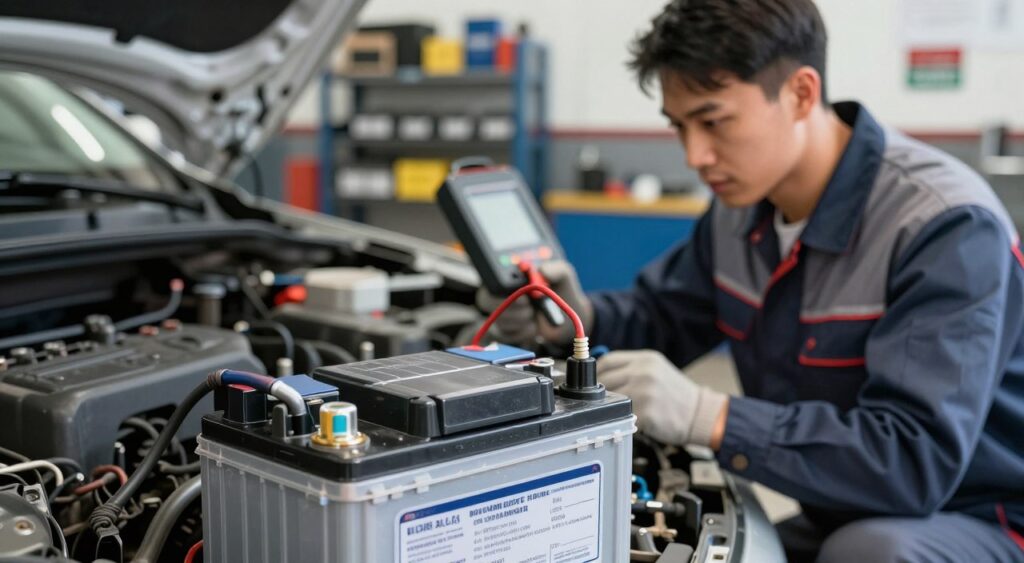
One myth is that car batteries don’t need maintenance. In reality, regular checks and care are key to a longer battery life. For example, corrosion on terminals can hurt a battery’s performance. Cleaning with baking soda and water can prevent this.
Another myth is that jump-starting is harmless. While it can save the day, too many jump-starts can shorten a battery’s life. It’s best to use jump-starts only in emergencies.
- Myth: You should always replace your car battery every five years.
- Fact: A battery’s life depends on driving habits, climate, and care. Some can last more than five years with the right care.
Misconceptions About Lifespan
Many think all car batteries last the same. The best battery for your car depends on your vehicle, driving, and preferences. For example, batteries for extreme temperatures or deep cycle use last differently than standard ones.
Another myth is that a battery’s lifespan is fixed. In reality, proper care, like clean terminals and full charge, can extend its life.
- Regularly check your battery’s age and condition.
- Avoid letting your battery get too low.
- Keep your battery terminals clean.
By knowing the truth and debunking myths, you can better care for your car battery. Whether you’re looking for a new battery or want to keep your current one going, being informed is essential.
Cost of Car Battery Replacement
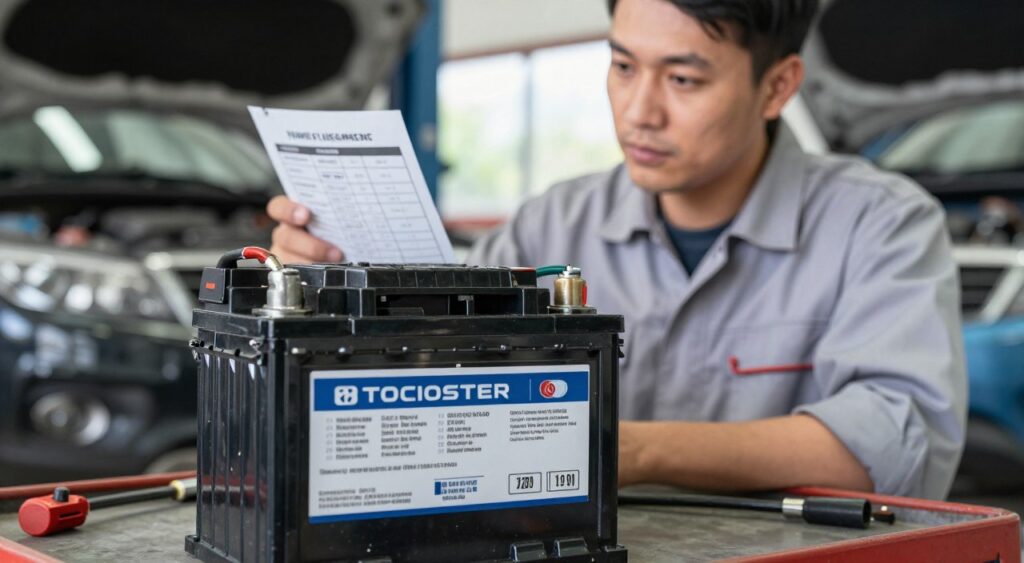
Knowing how much it costs to replace a car battery is key for planning your budget. The price can change a lot based on your car, the battery type, and the brand.
Average Prices in the U.S.
In the U.S., car batteries usually cost between $50 and $150. This depends on the battery’s quality and features. Here are some typical prices for different batteries:
- Standard Flooded Batteries: $50-$80
- Absorbent Glass Mat (AGM) Batteries: $100-$150
- Enhanced Flooded Batteries: $80-$120
These prices are just for the battery. Adding installation costs can be another $10 to $20 if a pro does it.
Factors That Affect Cost
Several things can make car battery replacement more expensive, including:
- Vehicle Type: Cars that are fancy or have the latest tech might need pricier batteries.
- Battery Brand: Brands like Optima or DieHard might cost more because of their quality and warranty.
- Battery Technology: Newer tech like AGM or Enhanced Flooded Batteries usually costs more.
- Installation Costs: If you get a pro to install it, you’ll pay extra.
Understanding these factors helps car owners plan their budget better for battery replacement.
Professional vs. DIY Battery Replacement
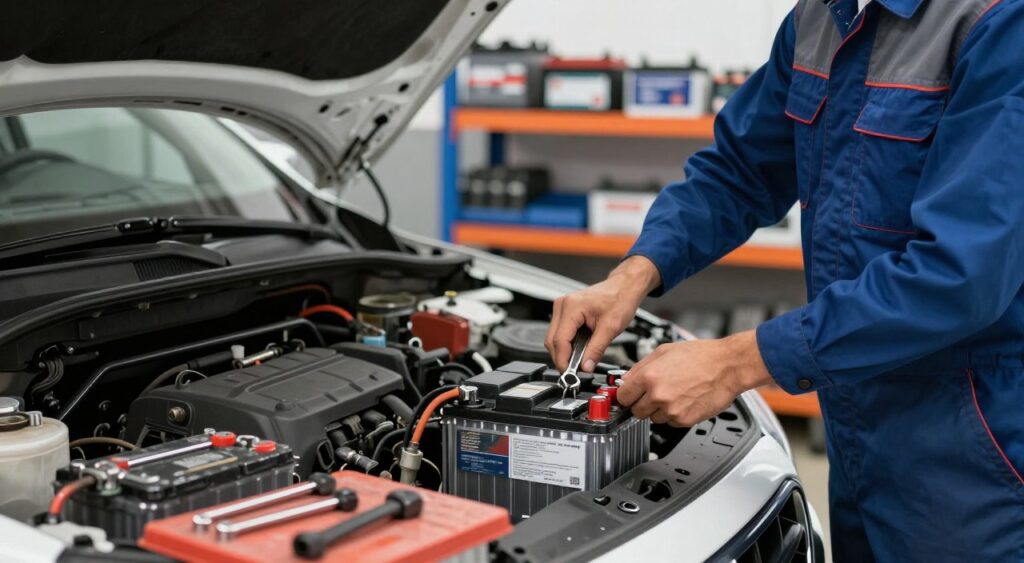
Choosing between DIY and professional car battery replacement can save you money and time. Replacing a car battery is simple but needs some technical know-how and caution.
Pros and Cons of Going DIY
DIY car battery replacement can save you money and feel empowering. But, it also has risks like improper installation or safety hazards if not done right.
- Pros:
- Cost savings on labor
- Immediate replacement without waiting for a service appointment
- A sense of accomplishment and DIY satisfaction
- Cons:
- Risk of incorrect installation
- Safety risks if proper precautions are not taken
- Lack of warranty on the replacement work
When to Seek Professional Help
If you’re unsure or uncomfortable with the replacement process, get professional help. Experts ensure a safe and correct installation, often with a warranty.
“If you’re not familiar with the intricacies of your vehicle’s electrical system, it’s best to leave battery replacement to the professionals.” –
Modern cars with complex electrical systems need special tools and knowledge for battery replacement. This makes professional service a better choice.
Frequently Asked Questions About Car Batteries
Knowing about your car battery is key to keeping your car in top shape. We’ve talked about replacing, maintaining, and fixing car batteries. Here, we answer some common questions to help you understand more.
Lifespan of a Car Battery
A car battery usually lasts three to five years. This depends on how you drive, the weather, and how well you take care of it. Regular checks can tell you if your battery is getting old.
Troubleshooting a Dead Battery
If your car battery goes dead, finding out why is important. Look for corrosion on the terminals and make sure the battery is tight. If it’s old or can’t hold a charge, it might be time for a new one.
Jump-Starting a Car Battery
Jump-starting can help if your battery dies. But, it’s important to do it safely to avoid harm or damage. If you need to jump-start your car often, it might be a sign that your battery needs attention or replacement.
FAQ
How long does a car battery typically last?
What are the signs that my car battery needs to be replaced?
Can I replace my car battery myself?
How do I choose the right car battery for my vehicle?
What are some tips for maintaining my car battery?
Can I jump-start a dead car battery?
How do I recycle my old car battery?
What factors affect the cost of car battery replacement?
What is the average cost of a car battery replacement in the U.S.?
How can I check the voltage of my car battery?