Accelerate Your Ride: Optimize Car Performance
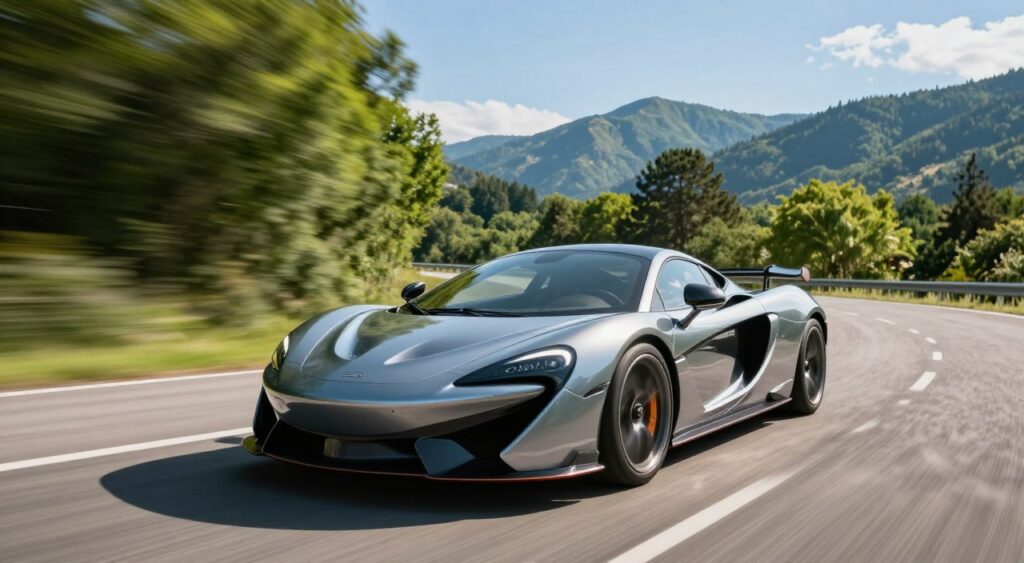
For car lovers, the joy of driving is linked to the excitement of rapid acceleration. Whether you’re cruising on the highway or racing on the track, quick acceleration matters. But, achieving top automotive performance is about more than just a strong engine.
Many things affect how fast a car can go, like its weight, how it cuts through the air, and its gearing. By tweaking these areas, drivers can boost their car’s speed and response. This article will dive into the details of car performance tuning. It will show you how to make your car faster and more agile.
Key Takeaways
- Understanding the factors that influence automotive performance.
- Optimizing vehicle weight for better acceleration.
- The role of aerodynamics in boosting car performance.
- Gearing strategies for improved acceleration.
- Additional tips for optimizing your vehicle’s performance.
Understanding Car Acceleration: The Basics
To truly appreciate your vehicle’s capabilities, it’s essential to grasp the basics of car acceleration. Car acceleration refers to the rate at which a vehicle increases its speed. It’s a critical aspect of vehicle performance that affects the overall driving experience.
What is Car Acceleration?
Car acceleration is influenced by several factors, including engine power, vehicle weight, and aerodynamics. Engine power determines how quickly a vehicle can accelerate, while vehicle weight affects the energy required to move the vehicle. Aerodynamics play a vital role in reducing air resistance, which enhances acceleration.
Key Factors Affecting Acceleration
Several key factors affect a vehicle’s acceleration. Engine power is one of the most significant factors, as it directly impacts how quickly a vehicle can accelerate. Vehicle weight is another critical factor, as heavier vehicles require more energy to accelerate.
Also, aerodynamics play a vital role in reducing air resistance, which can significantly impact acceleration, even at high speeds.
Acceleration testing is used to measure a vehicle’s performance. It involves assessing how quickly a vehicle can go from 0 to a certain speed, typically 60 mph. Understanding these factors can help drivers optimize their vehicle’s performance and enhance their driving experience.
Types of Acceleration Tests
To see how fast a car goes, many tests are used. These tests help fans and makers know what a car can do.
Acceleration tests show how quick a car speeds up. The car’s engine, weight, and shape affect these tests.
0-60 mph Test Explained
The 0-60 mph test is key for measuring a car’s speed. It shows how fast a car goes from 0 to 60 mph. This test is important for quick starts on highways or to dodge dangers.
A car’s 0-60 mph time shows its speed and quickness. Cars that do well here have strong engines and are built for fast driving.
Quarter-Mile Run
The quarter-mile run is another test. It measures how fast a car goes 402 meters from a stop. This test is great for drag racing and shows a car’s quickness over a short distance.
The quarter-mile run is tougher than the 0-60 mph test. It needs a car to keep going fast for a longer time. Cars that do well here have lots of power and good grip.

Real-World Acceleration Examples
Real-world tests show how a car really performs. They consider things like road, weather, and how the driver drives.
A car might hit a certain 0-60 mph time in perfect conditions. But it might not do as well in real life. Knowing this helps car fans get the best from their cars.
Looking at different tests and real-life examples helps car owners see what their car can do. It also shows where they might need to improve.
The Physics Behind Acceleration
To understand how to speed up a car, we must explore the physics involved. Acceleration is key to a vehicle’s performance. Knowing the science behind it can make a car go faster and more efficiently.
Newton’s Laws of Motion
Newton’s laws are essential for understanding car acceleration. The first law says an object stays put or moves straight unless a force acts on it. This is why a car needs a push to start moving.
The second law connects an object’s motion to the force on it and its mass. It’s shown by F = ma, where F is the force, m is mass, and a is acceleration. This law shows that more force means faster acceleration, if mass stays the same.
The third law explains how forces work in pairs. It shows how the force from the tires pushes the car forward.
“Acceleration is not just a product of engine power; it’s a complex interplay of forces and mass.” This quote shows that acceleration isn’t just about horsepower. It’s also about how well that power turns into motion.
Force vs. Mass
The link between force and mass is key to car acceleration. Newton’s second law says acceleration depends on force and inversely on mass. This means more force means faster acceleration, for the same mass.
For the same power, a lighter car will speed up faster. This is why fast cars are often light but powerful.
The Role of Friction
Friction is vital for car acceleration. It’s what lets the car move forward. Without enough friction, the car won’t budge.
The type of tires and the road surface affect friction. Racing tires, for example, have more friction for better speed. But too much friction can wear out tires and hurt performance.
In summary, car acceleration involves Newton’s laws, force and mass, and friction. Knowing these can help improve a car’s speed and efficiency.
Engine Performance and Acceleration
Engine performance is key for fast acceleration. High-performance cars are built for speed and agility. The engine is what makes this possible.
The engine is the heart of any vehicle. Its performance affects how fast a car can go. Engine power is important because it shows how quickly a car can speed up.
How Engine Power Influences Speed
Engine power, in horsepower (hp) or kilowatts (kW), is vital for speed. A more powerful engine means a car can go from 0 to 60 mph faster. This is because a strong engine can push the car forward quickly.
A car with a high-performance engine can go from 0 to 60 mph fast. This is great for drivers who love speed and agility.
The Importance of Torque
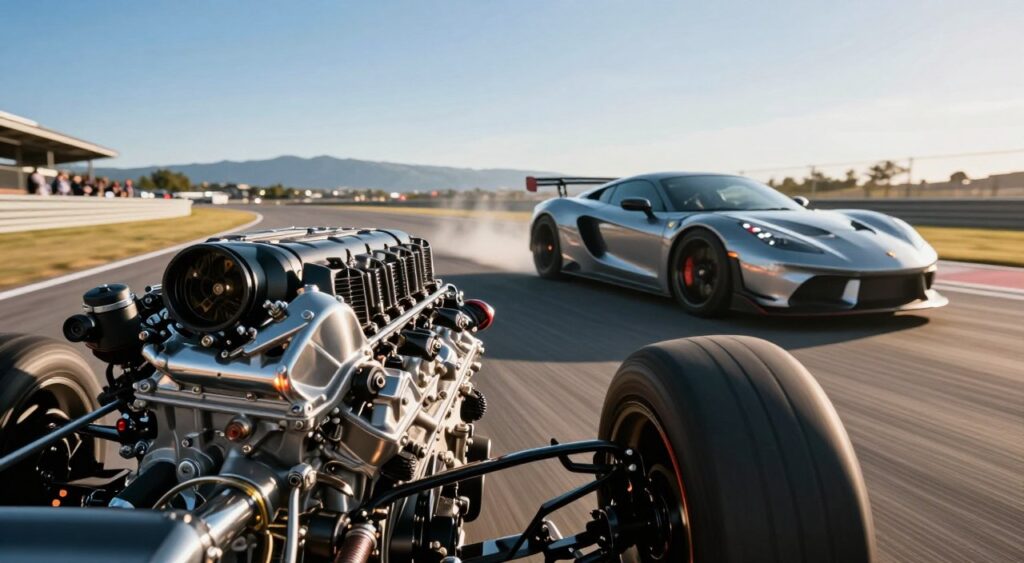
Torque is also key for acceleration. Torque is the rotational force the engine makes. A higher torque means the engine can push the car forward more.
Together, engine power and torque help a car accelerate well. Car makers adjust engines to get the best power and torque for fast acceleration.
Turbocharging vs. Naturally Aspirated
The engine type, turbocharged or naturally aspirated, affects acceleration. Turbocharged engines use a turbine to compress air, boosting power. Naturally aspirated engines use atmospheric pressure to draw air.
Turbocharging makes engines more efficient and powerful without being too big. This helps high-performance cars accelerate better. Many cars use turbocharging for better speed.
Weight and Its Impact on Acceleration
Vehicle weight is a key factor in acceleration. Lighter cars usually beat heavier ones. Understanding this relationship helps improve a car’s performance.
A car’s weight impacts its speed because more mass means more energy needed to move it. This is based on Newton’s second law of motion. It shows that acceleration depends on the force applied and the object’s mass.
The Effect of Weight Reduction
Lightening a car boosts its acceleration. By losing weight, a car gets a better power-to-weight ratio. This makes it faster from a stand. You can reduce weight by using lighter materials or removing extra parts.
Benefits of weight reduction include:
- Improved acceleration
- Better handling
- Enhanced fuel efficiency
Understanding Power-to-Weight Ratio
The power-to-weight ratio shows a car’s power compared to its weight. It’s key for knowing how fast a car can go. A higher ratio means a car can accelerate faster.
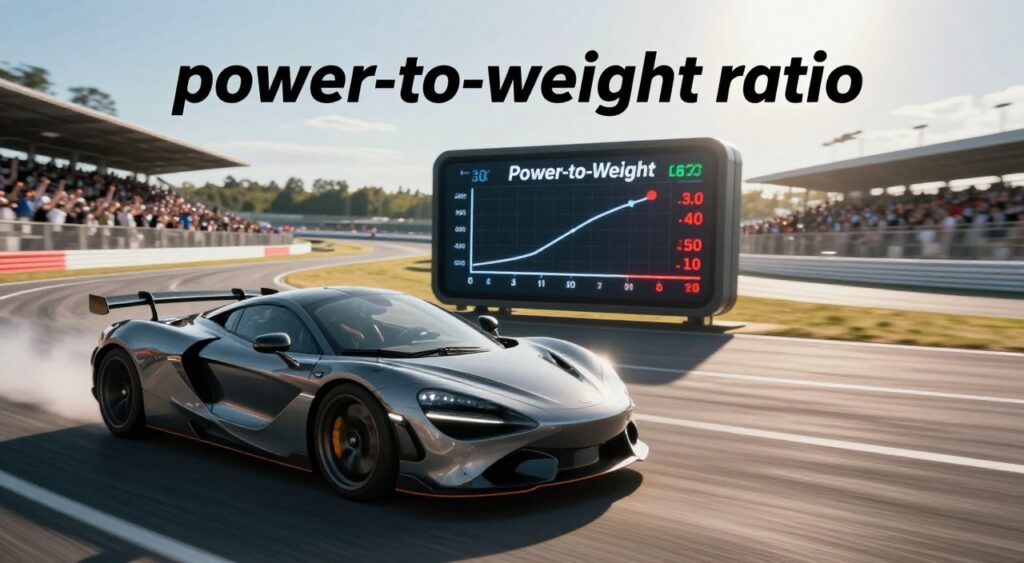
To find the power-to-weight ratio, divide the car’s power by its weight. For instance, a car with 300 horsepower and 3,000 pounds has a ratio of 0.1 horsepower per pound.
A higher power-to-weight ratio is better because it:
- Enhances acceleration
- Improves overall performance
- Provides a more responsive driving experience
Tire Selection and Acceleration
Tire selection is key to your car’s acceleration. The right tires improve road grip, making your car accelerate faster and safer.
Choosing the right tires is important. For quick acceleration, tires with good grip are essential. This is where the type of tire matters.
Types of Tires for Better Grip
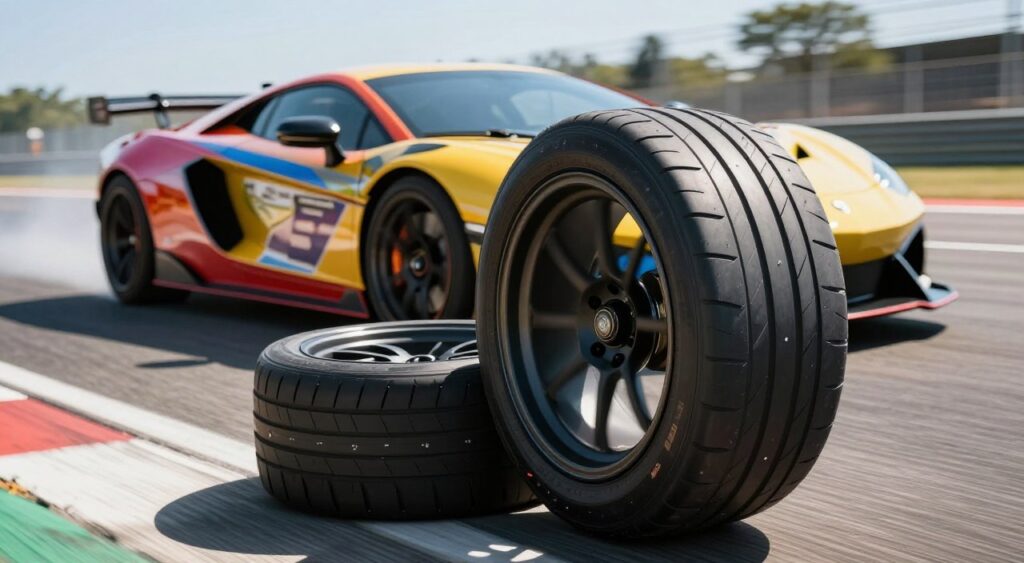
Different tires offer different grip levels. High-performance tires are made for better traction, perfect for quick starts. They use softer compounds that grip the road well at high speeds.
All-season tires balance grip and durability for daily driving. But for the best acceleration, performance tires are a better choice.
Tire Pressure and Performance
Tire pressure greatly affects your car’s acceleration. Properly inflated tires ensure better road contact, vital for grip and acceleration. Underinflated tires reduce traction, increase stopping distances, and slow acceleration.
Regularly check and maintain your tire pressure as recommended by your car’s maker. This simple step can greatly improve your car’s acceleration and handling.
Understanding tire selection and pressure is vital for better acceleration. Whether you aim to cut your 0-60 mph time or enhance responsiveness, the right tires and care are essential.
Advanced Technologies Enhancing Acceleration
The search for faster cars has led to new tech, like aerodynamic designs and smart traction control. These are key in the car world, where speed matters a lot.
The Role of Aerodynamics
Aerodynamics help cars go faster by cutting down on drag and boosting downforce. Downforce pushes the car down, making it stick to the road better. This means cars can turn and speed up quicker.
Car makers use air dams, spoilers, and diffusers to improve aerodynamics. These parts help air flow smoothly around the car. This reduces drag and increases downforce.

Smart Traction Control Systems
Smart traction control systems also play a big role in speed. They keep an eye on the power going to the wheels. This stops wheelspin and keeps the car stable.
These systems adjust power based on the road conditions. In slippery spots, they cut power to prevent slipping. On dry roads, they let the car speed up more.
| Technology | Function | Benefit |
|---|---|---|
| Aerodynamic Design | Reduces drag and improves downforce | Enhanced acceleration and cornering stability |
| Smart Traction Control | Monitors and controls power to wheels | Improved traction and reduced wheelspin |
In summary, tech like aerodynamics and smart traction control are key for faster cars. By using these, car makers can make vehicles that are both fast and powerful.
Improving Acceleration with Modifications
Looking to speed up your car? Several modifications can make a big difference. Understanding the key components that affect speed and performance is key.
Performance Chips and Tuners
Performance chips and tuners boost a car’s acceleration. They adjust the engine’s computer settings for better fuel injection and timing. This leads to improved performance.
Benefits of Performance Chips and Tuners:
- Increased horsepower and torque
- Improved throttle response
- Enhanced engine efficiency
The Edge Evolution CTS3 tuner is a great example. It lets drivers adjust their car’s performance in real-time. This can greatly improve acceleration by optimizing engine performance.
| Tuner Model | Horsepower Gain | Torque Gain |
|---|---|---|
| Edge Evolution CTS3 | Up to 30 | Up to 60 |
| Bully Dog GT | Up to 25 | Up to 50 |
Upgrading Exhaust Systems
Upgrading the exhaust system also boosts acceleration. A high-performance system reduces backpressure. This lets the engine breathe better and produce more power.
Key Components of a High-Performance Exhaust System:
- High-flow catalytic converters
- Performance mufflers
- Free-flowing exhaust pipes
A Borla Exhaust System is a good example. It reduces backpressure and boosts engine performance. This upgrade not only speeds up your car but also makes it sound more aggressive.
By making these modifications, car lovers can greatly improve their vehicle’s speed and performance. Whether it’s through chips, tuners, or exhaust upgrades, the right changes can make a big difference.
Regular Maintenance for Peak Performance
Unlocking your car’s full power starts with regular maintenance. This keeps your vehicle running at its best. It ensures top vehicle speed and automotive performance.
Keeping your car in top shape means focusing on key areas. For example, regular tune-ups are essential for a smooth engine.
Importance of Regular Tune-Ups
Tune-ups involve checking and adjusting your car’s engine. They catch problems early, so your car stays in great shape.
A mechanic will look at spark plugs, air filters, and fuel filters during a tune-up. This boosts your car’s performance and saves fuel.
Checking Fluid Levels and Filters
It’s also important to check fluid levels and filters regularly. Make sure engine oil, transmission fluid, and coolant are at the right levels.
Don’t forget to check and replace air and fuel filters when needed. Clean filters and the right fluid levels keep your engine safe and running well.
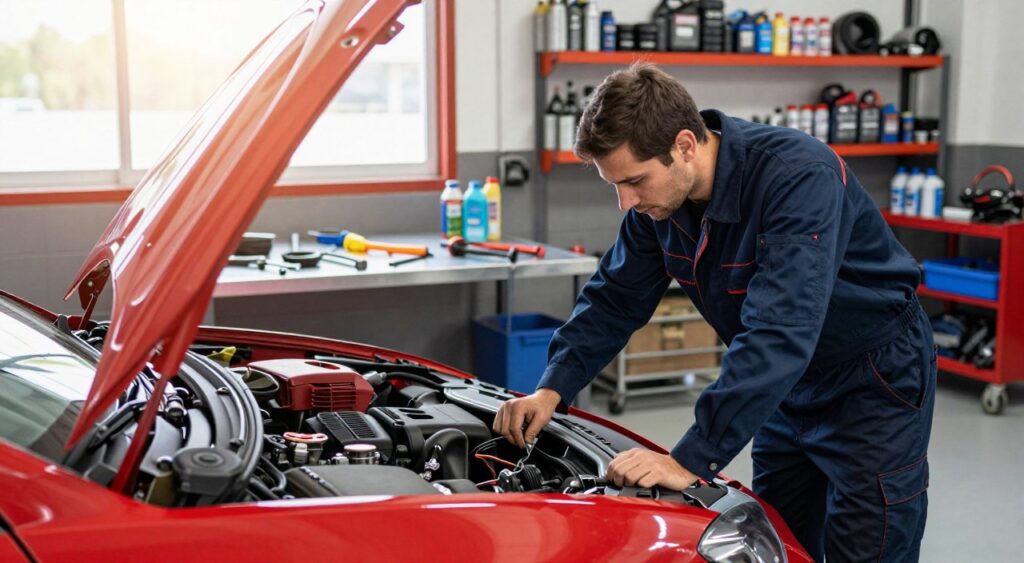
Regular maintenance keeps your car performing at its best. It makes driving better and keeps your vehicle healthy.
Conclusion: Achieving Optimal Car Acceleration
Improving car acceleration is key for those who love fast driving. Knowing what affects speed helps drivers get the most out of their cars.
Key Takeaways
We’ve looked at what makes a car go fast, like engine power, weight, and tire choice. We’ve also talked about new tech. This knowledge helps drivers make their cars faster.
Optimizing for Performance
To get your car to go faster, think about adding performance chips or better exhausts. Don’t forget aerodynamic tweaks. Keeping your car in top shape with regular checks is also important.
By using these tips, drivers can make their cars accelerate better. This makes driving more fun and exciting.
FAQ
What is the most important factor in determining a car’s acceleration?
How does engine type affect acceleration?
What is the significance of 0-60 mph tests in measuring car acceleration?
How does vehicle weight impact acceleration?
What role do tires play in a car’s acceleration?
Can modifications improve a car’s acceleration?
How does aerodynamics affect a car’s acceleration?
What is the importance of regular maintenance for optimal acceleration?
How does horsepower performance relate to car acceleration?
What is the effect of smart traction control systems on acceleration?