The 2026 Bugatti Tourbillon: A V16 Hybrid Masterpiece Defining the New Era of Hypercars
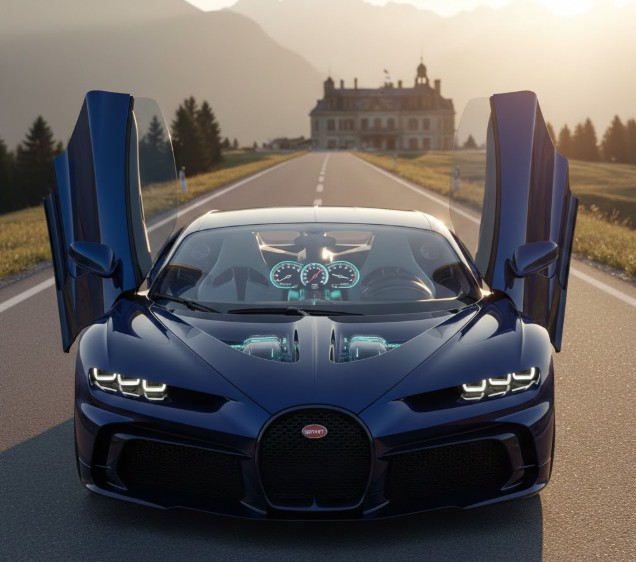
For over a century, the name Bugatti has been synonymous with the absolute peak of automotive engineering. From the record-breaking Veyron to the legendary Chiron, the Molsheim-based brand has consistently pushed the boundaries of what a road car can achieve. Now, as we look toward 2026, a new icon emerges: the Bugatti Tourbillon.
Named after the intricate mechanism in high-end mechanical watches that counters the effects of gravity, the Tourbillon is not just a car; it is a statement of “timelessness.” In an era dominated by digital screens and rapid electrification, Bugatti has taken a radical detour, combining a massive, naturally aspirated V16 engine with cutting-edge electric performance.
The Heart of the Beast: An 8.3-Liter Naturally Aspirated V16

The most shocking revelation of the 2026 Bugatti Tourbillon is its powertrain. While the automotive world expected a downsized engine or a full EV, Bugatti delivered the opposite. Gone are the four turbochargers of the Chiron. In their place sits a 252 kg (555 lbs) masterpiece of internal combustion: an 8.3-liter naturally aspirated V16 engine developed in collaboration with Cosworth.
This engine alone produces a staggering 1,000 horsepower and screams to a 9,500 rpm redline. But the innovation doesn’t stop at the combustion. To ensure the Tourbillon remains at the front of the hypercar pack, Bugatti integrated three electric motors—two on the front axle and one at the rear.
Engineering Excellence: Combined Hybrid Performance
The synergy between the V16 and the electric system results in a total output of 1,800 horsepower. This hybrid setup provides the instant torque of an electric vehicle with the soul-stirring sound and top-end power of a high-revving 16-cylinder engine.
0–60 mph: Under 2.0 seconds
0–186 mph (300 km/h): Under 10 seconds
Top Speed: 277 mph (445 km/h) with the Speed Key
Electric Range: Approximately 37 miles (60 km) for silent city driving
Design Philosophy: Shaped by Speed and Heritage

The exterior of the 2026 Tourbillon is an evolution of the “Form Follows Performance” mantra. Every curve, vent, and line is designed to manage airflow at speeds exceeding 250 mph. The iconic Bugatti horseshoe grille remains, but it is wider and more aggressive, flanked by slim LED headlights that give the car a predatory “eight-eye” look.
One of the most striking features is the dihedral doors. Unlike the conventional doors of the Chiron, these swing upward and outward, offering a dramatic entrance that befits a multi-million dollar hypercar. The rear of the car is dominated by a massive, integrated diffuser and a continuous LED light strip that follows the curvature of the bodywork.
Aerodynamics and Lightweight Construction
Despite adding a heavy battery pack and three electric motors, the Tourbillon is actually lighter than the Chiron. This was achieved through the extensive use of a new T800 carbon composite monocoque and 3D-printed suspension components. The 3D-printed aluminum suspension arms are 45% lighter than those found on its predecessor, proving that Bugatti is utilizing Formula 1-level technology for its road cars.
The Interior: A Rejection of Digital Obsolescence
In perhaps the most daring move in modern car design, Bugatti has largely banished digital screens from the Tourbillon’s cabin. Bugatti CEO Mate Rimac wanted to create an interior that would look as beautiful in 100 years as it does today.
The Swiss-Made Analog Cluster
The centerpiece of the interior is an analog instrument cluster designed and crafted by Swiss watchmakers. Comprised of over 600 parts and constructed from titanium, rubies, and sapphire glass, the cluster remains fixed in place while the steering wheel rim rotates around it. This ensures that the driver always has a clear view of the speedometer and tachometer, regardless of the steering angle.
Luxury Meets Purpose
The cabin features fixed, low-slung seats that are integrated directly into the chassis to save weight and provide a better “feel” for the road. To accommodate different drivers, the pedal box and steering column are fully adjustable. Every touchpoint is made of authentic materials—machined aluminum, crystal glass, and the finest leathers—ensuring a tactile experience that no touchscreen could ever replicate.
Exclusivity and the American Market
For collectors in the United States, the Bugatti Tourbillon represents the pinnacle of “Haute Horlogerie” on wheels. With a limited production run of only 250 units globally, securing a build slot is a feat in itself.
Pricing and Availability
The 2026 Bugatti Tourbillon starts at approximately $4.6 million USD. However, most buyers are expected to spend significantly more. Options like the “Equipe Pur Sang” aerodynamic package or custom carbon fiber paint finishes can easily push the final price tag over the $5 million mark.
Deliveries are scheduled to begin in 2026, following the completion of the Bolide and W16 Mistral production runs. For the American enthusiast, the Tourbillon is more than just a fast car; it is a collectible asset that bridges the gap between the mechanical past and the hybrid future.
Why the Tourbillon Matters

The Bugatti Tourbillon arrives at a crossroads in automotive history. While other manufacturers are moving toward silent, screen-heavy EVs, Bugatti is doubling down on the visceral, mechanical experience. By choosing a naturally aspirated V16 and an analog interior, Bugatti is ensuring that the Tourbillon will never feel “outdated” by the next software update.
It is a celebration of the internal combustion engine, enhanced by modern technology to reach performance levels that were once thought impossible. The 2026 Tourbillon is not just the successor to the Chiron; it is a new benchmark for the entire industry.
Would you like me to help you draft a comparison table between the specs of the 2026 Tourbillon and the outgoing Chiron?

You Might Also Like